DETERMINATION OF THE PERMANENT WILTING POINT IN AN INCEPTISOL AND AN OXISOL USING DIFFERENT INDICATOR PLANTS
DOI:
https://doi.org/10.36725/agries.v12i1.11390Keywords:
Inceptisol, Oxisol, physical method, physiological method, gravimetric moistureAbstract
The permanent wilting point (PWP) represents the minimum soil moisture level at which plants irreversibly
lose their ability to absorb water, being a key parameter for water management. This study aimed to
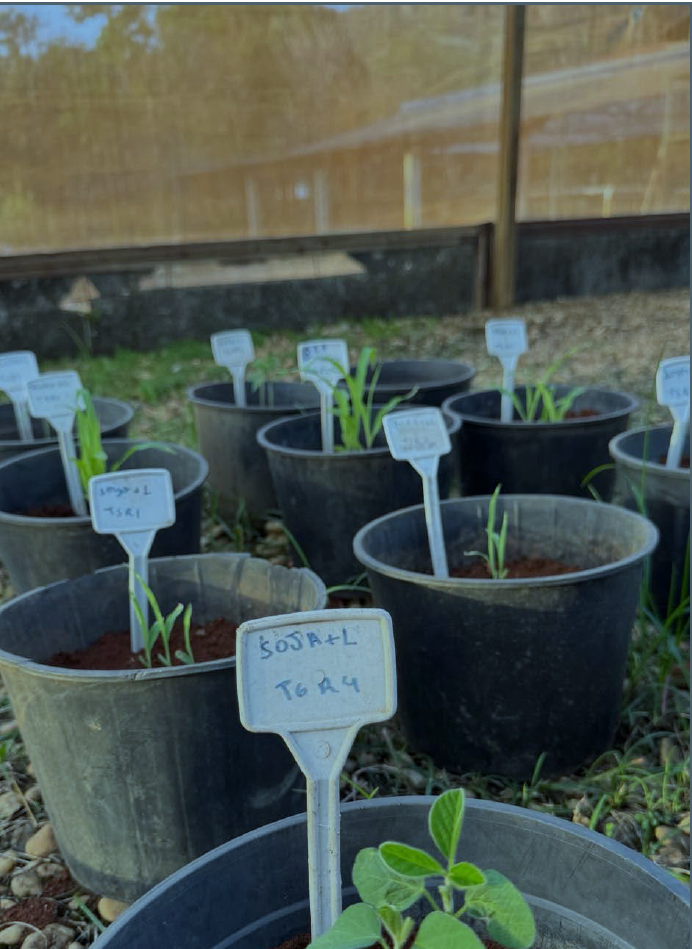
determine soil moisture at the PWP using different indicator plants (maize, soybean, and sorghum) in
Inceptisol and Oxisol, and to compare the physiological method with the standard physical method (1500
kPa). The experiment was conducted in a greenhouse using a completely randomized design in a 3 × 2
factorial scheme (crops × soils), with five replications. Data were subjected to analysis of variance and
Tukey’s test (p≤0.05), and methods were compared using the t-test. A significant interaction between crops
and soils was observed, with higher PWP moisture values in the Oxisol. Differences in water extraction
capacity among crops were also identified, especially in the Oxisol, with maize showing superior
performance. The comparison between methods indicated equivalence for soybean and sorghum in the Oxisol, whereas significant differences were observed in the Inceptisol and for maize. The results
demonstrate that PWP is not a fixed value, varying according to soil type, plant species, and determination
method, highlighting the need for context-specific approaches in irrigation management.
Downloads
Published
Issue
Section
License
Copyright
Upon acceptance of a manuscript, authors will be asked to complete an "exclusive license" form that will allow the manuscript to be disclosed in the form of open access. In order to do the work of publishing and disseminating the research paper manuscript we need the rights to publish. For open access manuscripts, we use an exclusive licensing agreement where authors retain copyright from their manuscript.
In this agreement the authors retain rights to:
-Patents and other intellectual property rights in manuscript
-The right to credit for published work