BURITI LEAF SHEATH (Mauritia flexuosa) AS AN ALTERNATIVE SUBSTRATE IN CUCUMBER CULTIVATION (Cucumis sativus) AND ITS INFLUENCE ON INSECT PEST OCCURRENCE IN A PROTECTED ENVIRONMENT
DOI:
https://doi.org/10.36725/agries.v11i2.10715Keywords:
Protected cultivation, Vegetable, WhiteflyAbstract
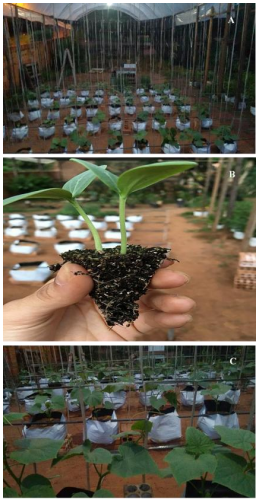
The objective of this study was to evaluate the feasibility of using buriti (Mauritia flexuosa) leaf sheath as an
alternative substrate for cucumber (Cucumis sativus) production and its effect on whitefly (Bemisia tabaci)
occurrence in a protected environment. The experiment was conducted in a greenhouse in Santa Tereza do
Tocantins, Brazil, using two cucumber cultivars (Caipira and Long Green) and four treatments with different
proportions of substrate: 100% sand (control), 25%, 50%, and 75% of shredded buriti sheath mixed with sand.
Evaluated parameters included plant height, stem diameter, number of leaves and flowers, fruit weight and
length, and whitefly nymph counts. Buriti-based substrates did not significantly affect vegetative development.
However, the 25% and 50% buriti treatments increased fruit weight in the Long Green cultivar. Additionally,
the 50% buriti treatment significantly reduced whitefly nymphs. It is concluded that the buriti sheath is a
viable alternative substrate, offering agronomic and phytosanitary advantages for protected cucumber
cultivation.
Downloads
Published
Issue
Section
License
Copyright
Upon acceptance of a manuscript, authors will be asked to complete an "exclusive license" form that will allow the manuscript to be disclosed in the form of open access. In order to do the work of publishing and disseminating the research paper manuscript we need the rights to publish. For open access manuscripts, we use an exclusive licensing agreement where authors retain copyright from their manuscript.
In this agreement the authors retain rights to:
-Patents and other intellectual property rights in manuscript
-The right to credit for published work