ANTIFUNGAL POTENTIAL OF ETHANOLIC EXTRACTS FROM CERRADO PLANTS
DOI:
https://doi.org/10.36725/agries.v12i3.12014Keywords:
Vatairea macrocarpa, Copaifera langsdorffi, Himatanthus obavatus, Sclerotium rolfsiiAbstract
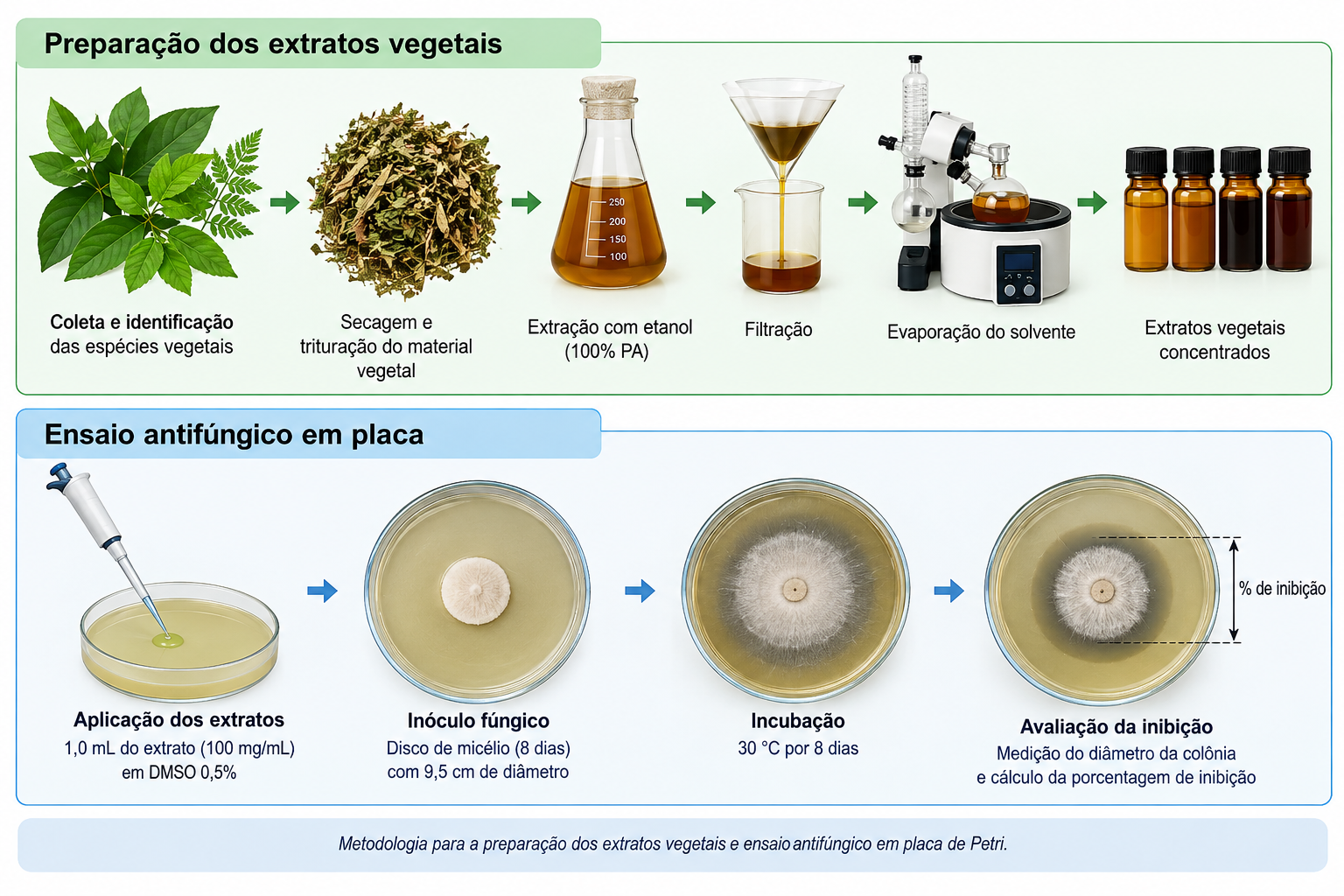
This study evaluated the in vitro antifungal activity of ethanolic leaf extracts from plant species native to the Brazilian Cerrado against the mycelial growth of Sclerotium rolfsii. The assays were performed in triplicate using PDA medium and incubation at 30 °C for eight days. Inhibition was calculated based on the orthogonal diameter, and the data were analyzed using Tukey’s test (image). The treatments with copaiba and Cerrado angelim stood out with the highest inhibition rates (92,2% and 89,1%, respectively), showing statistical equivalence to the commercial control (difenoconazole). The other extracts that showed intermediate performance also exhibited a high inhibitory capacity, with inhibition percentages ranging from 83.7% to 85.7%. The Cerrado tiborna extract showed the lowest inhibitory capacity (79.9%), although it was still effective in inhibiting the phytopathogen. Overall, the results demonstrate the potential of native plant biodiversity as a source of biological alternatives for the sustainable management of phytopathogens.
Downloads
Published
Issue
Section
License
Copyright
Upon acceptance of a manuscript, authors will be asked to complete an "exclusive license" form that will allow the manuscript to be disclosed in the form of open access. In order to do the work of publishing and disseminating the research paper manuscript we need the rights to publish. For open access manuscripts, we use an exclusive licensing agreement where authors retain copyright from their manuscript.
In this agreement the authors retain rights to:
-Patents and other intellectual property rights in manuscript
-The right to credit for published work