
GROWTH AND DEVELOPMENT OF COVER CROPS IN THE MÉDIO MEARIM REGION, MARANHÃO
DOI:
https://doi.org/10.36725/agries.v11i2.10827Keywords:
Green manure, plant growth analysis, family farmingAbstract
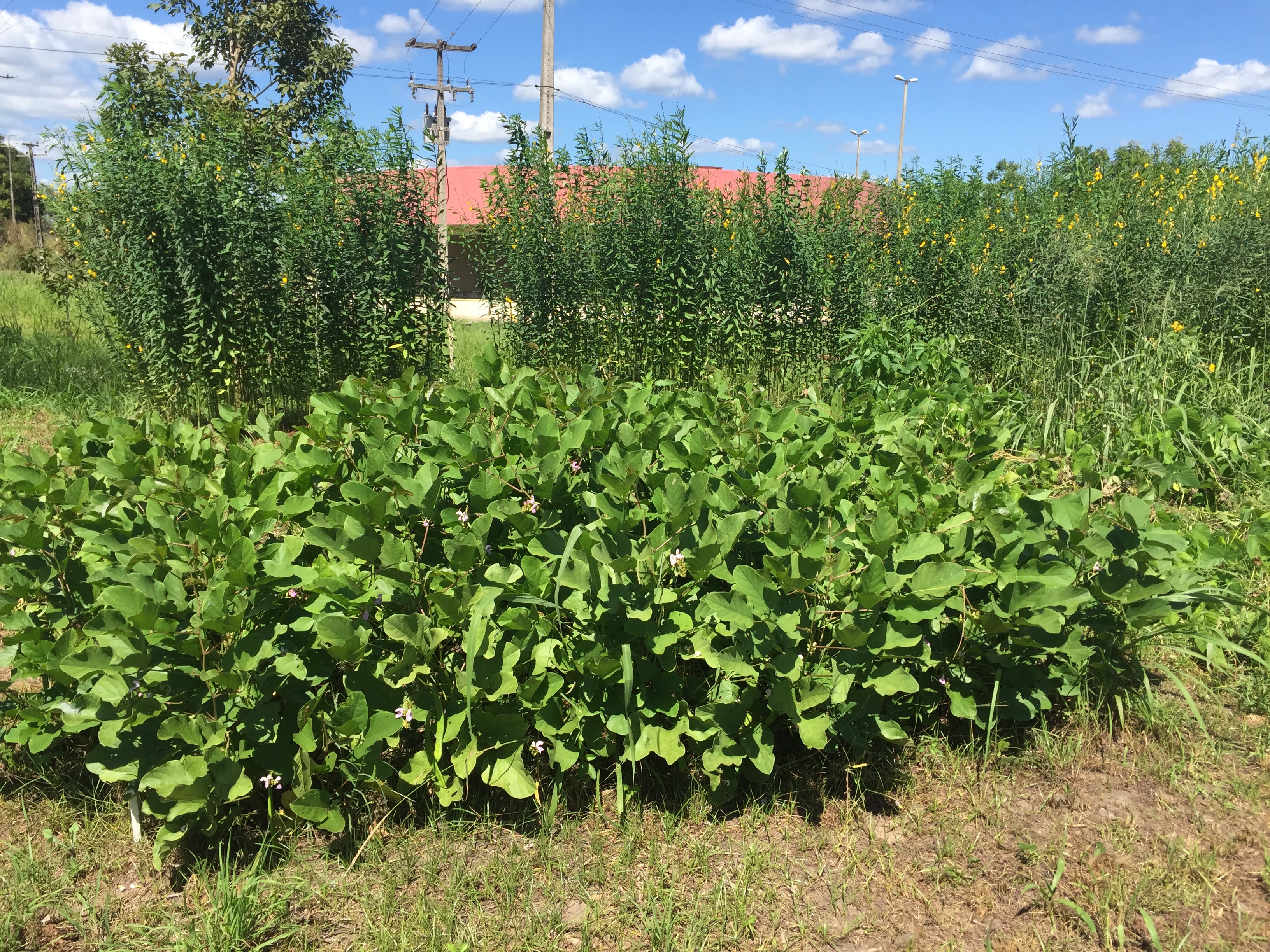
This study aimed to evaluate the growth of the legumes sunn hemp (Crotalaria juncea L.), velvet bean
(mucuna-cinza pruriens (L.) DC), and jack bean (Canavalia ensiformis (L.) DC) as potential soil cover crops
under the edaphoclimatic conditions of the Médio Mearim region, Maranhão State, Brazil. The experiment
was carried out in the “Horto” experimental field of the Federal University of Maranhão (UFMA), in Bacabal.
A completely randomized design was used, with four replications in a 3 × 2 factorial scheme—three species
and two plant densities—totaling 24 experimental plots. Sowing was performed in April 2021, and the
samplings were conducted at 8, 23, 39, 56, 69, 83, and 104 days after emergence (DAE). The following
parameters were assessed: aboveground dry matter (DM), plant height, leaf area index (LAI), crop growth rate
(CGR), net assimilation rate (NAR), and relative growth rate (RGR). Results showed that sunn hemp recorded
the highest accumulation of aboveground dry matter. The highest mean LAI was observed in velvet bean,
while sunn hemp presented the lowest LAI due to differences in growth habit—velvet bean being prostrate
and sunn hemp erect—thus allowing velvet bean to achieve better ground coverage. On the other hand, the
highest maximum LAI was recorded for jack bean in the growth analysis. Under the studied edaphoclimatic conditions, sunn hemp exhibited superior morphophysiological parameters for CGR, RGR, and NAR when
sown in April.
Downloads
Published
Issue
Section
License
Copyright
Upon acceptance of a manuscript, authors will be asked to complete an "exclusive license" form that will allow the manuscript to be disclosed in the form of open access. In order to do the work of publishing and disseminating the research paper manuscript we need the rights to publish. For open access manuscripts, we use an exclusive licensing agreement where authors retain copyright from their manuscript.
In this agreement the authors retain rights to:
-Patents and other intellectual property rights in manuscript
-The right to credit for published work






