OPTIMIZATION OF CELLULASE PRODUCTION BY Yarrowia divulgata ISOLATED FROM THE TUCUM FRUIT
DOI:
https://doi.org/10.36725/agries.v12i1.11715Keywords:
Cellulolytic enzymes, fruits, Plackett-Burman design, palm treesAbstract
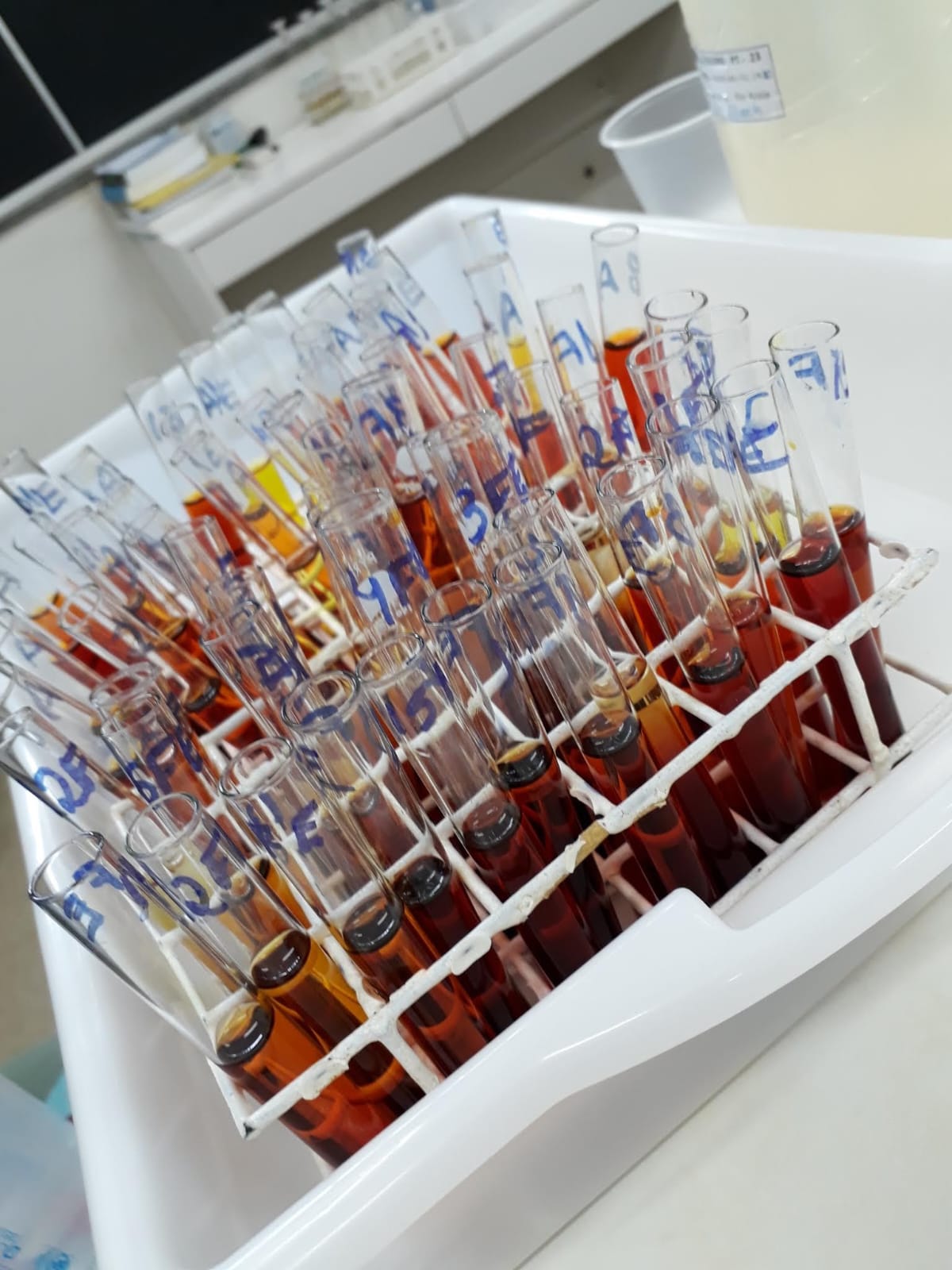
Cellulose is the most abundant organic and renewable biomass, considered a good alternative for the production of chemical products and biofuel. This study aimed to evaluate the influence of the variables pH, temperature, MgSO4, MnSO4, glucose, lactose, cellobiose and arabinose in the production of cellulases in submersed cultivation of a lineage of Yarrowia divulgata, using a Plackett-Burman (PB) design. Based on the results of the PB design, a complete RCCD (Rotable Central Composite Design) (22) outline was performed using MgSO4 and arabinose variables. The results showed that the amount of endoglucanase activity varied from 0 to 0,295 U/mL, for exoglucanase the activity varied from 0 to 0,234 U/mL, for total cellulose from 0 to 0,337 U/mL, for β-glucosidase from 0 to 1,184 U/mL. The statistical analysis showed that arabinose presented a significant influence for exoglucanase and β-glucosidase. Based on the generated models, the concentration of arabinose that would induce the most activity was 1 g for exoglucanase and of 10 g for β-glucosidase. The validation trials using these arabinose concentrations showed that a significant increase of activity occurred, varying from 0,141 to 0,355 U/mL for exoglucanase and from 0,954 to 0,964 U/mL for β-glucosidase. Two independent RCCDs were performed to evaluate the enzymatic extracts. The optimal pH and temperature for the enzymatic reaction obtained for β-glucosidase were 5 and 35°C (crude extract derived from cultivation with 1 g of arabinose) and 5.71 and 47.1°C (crude extract derived from cultivation with 10 g of arabinose). For the exoglucanase enzyme, the optimal pH was pH 6.0 (crude extract derived from cultivation with 1 g of arabinose) and there was not a significant influence of temperature. The Y. divulgata lineage showed potential to produce cellulolytic enzymes.
Downloads
Published
Issue
Section
License
Copyright
Upon acceptance of a manuscript, authors will be asked to complete an "exclusive license" form that will allow the manuscript to be disclosed in the form of open access. In order to do the work of publishing and disseminating the research paper manuscript we need the rights to publish. For open access manuscripts, we use an exclusive licensing agreement where authors retain copyright from their manuscript.
In this agreement the authors retain rights to:
-Patents and other intellectual property rights in manuscript
-The right to credit for published work