
THE ROLE OF THE MUNICIPAL MARKET OF COLMÉIA-TO IN SHORT AGRO-FOOD CHAINS: STRUCTURE, CHALLENGES, AND OPPORTUNITIES FOR RURAL DEVELOPMENT
DOI:
https://doi.org/10.36725/agries.v11i2.10817Keywords:
family farming, sustainable consumption, regional development.Abstract
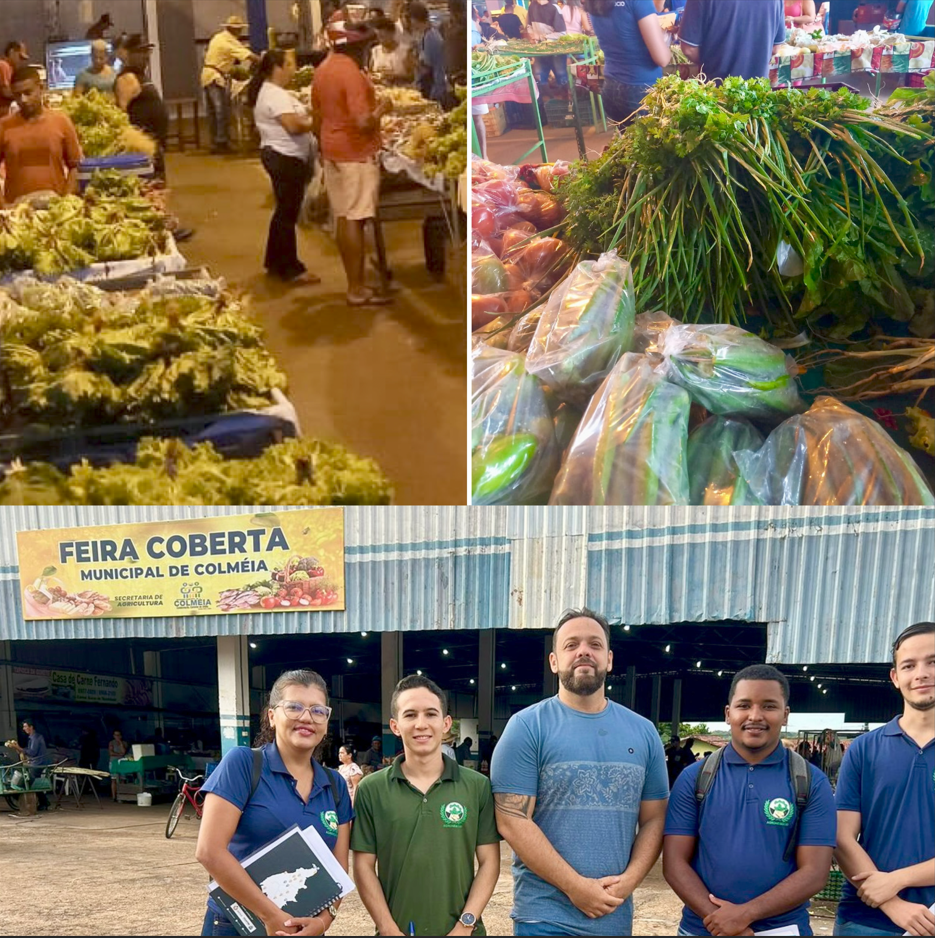
This study focuses on the municipality of Colméia, in the state of Tocantins, highlighting the significance of its Municipal Market in the context of family farming and local economic development, aiming to characterize the municipality’s agricultural relevance and to analyze the role of the market as a strategic space for commercialization. A descriptive and exploratory approach was adopted, combining qualitative and quantitative methods. Data was collected through bibliographic research, open-access secondary sources, interviews with public officials, direct observation, and questionnaires applied to market vendors. Analysis was performed using Google Forms and Microsoft Excel, with absolute and relative frequencies supporting qualitative interpretation. The findings demonstrate the municipality’s strong agricultural vocation, with
85,939 hectares under cultivation and 693 agricultural establishments. The Municipal Market reflects this context, being primarily composed of regional products such as fruits, vegetables, and cheeses. It was observed that 84% of vendors sell goods from their own production, which strengthens family farming and encourages younger generations to remain in rural areas. Nonetheless, challenges persist, including insufficient infrastructure, lack of official records, limited technical training, and inadequate sanitary control, along with a scarce supply of higher-value-added products. Among the few processed items, cheeses stand out, and their success indicates potential to improve competitiveness while addressing issues such as seasonality and competition from supermarkets. Overall, the Municipal Market of Colmeia, in the state of Tocantins, is significant for promoting family farming and reinforcing the local economy. Despite existing challenges, prospects are favorable. Investments in training, agroecological production, and value-added strategies are essential to consolidate and strengthen this space.
Downloads
Published
Issue
Section
License
Copyright
Upon acceptance of a manuscript, authors will be asked to complete an "exclusive license" form that will allow the manuscript to be disclosed in the form of open access. In order to do the work of publishing and disseminating the research paper manuscript we need the rights to publish. For open access manuscripts, we use an exclusive licensing agreement where authors retain copyright from their manuscript.
In this agreement the authors retain rights to:
-Patents and other intellectual property rights in manuscript
-The right to credit for published work






