
FIRST REPORT OF CHARCOAL ROT (Macrophomina sp.) ON PEANUT SEEDS IN PARÁ, BRAZIL
DOI:
https://doi.org/10.36725/agries.v11i2.10764Keywords:
fungal disease, health monitoring, preventive managementAbstract
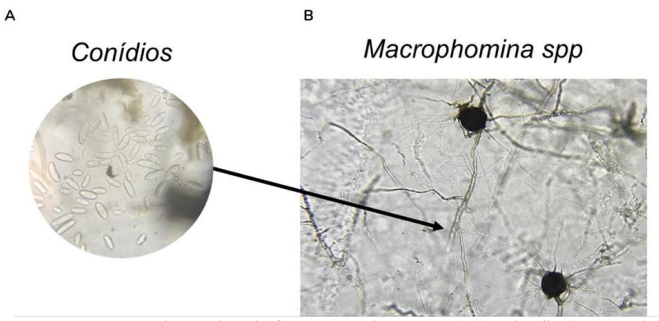
A fungal disease was observed in peanut seeds in Conceição do Araguaia, Pará state, in April 2024. The
infected seeds initially exhibited a blackened and grayish appearance, which eventually led to their death.
Morphological characteristics of colonies and spores grown on PDA medium indicated that the fungal isolate
belonged to the genus Macrophomina sp. A seed health test and a seed-to-seedling transmissibility test were
performed, each using 400 peanut seeds (cv. Tatu-Vermelho, Caiapó, BRS 151 L-7, and BR-1). The results
from both tests confirmed the presence of the Macrophomina fungus in the analyzed seeds and plants, which
displayed symptoms of charcoal rot disease. A pathogenicity test was successfully conducted on peanut plants of the Tatu-Vermelho cultivar using a completely randomized design with three replicates. Symptoms
appeared two days after inoculation, and the pathogen was confirmed according to Koch's Postulates. These
findings underscore the importance of seed health monitoring, which contributes to preventative management strategies and ultimately promotes more productive crops.
Downloads
Published
Issue
Section
License
Copyright
Upon acceptance of a manuscript, authors will be asked to complete an "exclusive license" form that will allow the manuscript to be disclosed in the form of open access. In order to do the work of publishing and disseminating the research paper manuscript we need the rights to publish. For open access manuscripts, we use an exclusive licensing agreement where authors retain copyright from their manuscript.
In this agreement the authors retain rights to:
-Patents and other intellectual property rights in manuscript
-The right to credit for published work






