
EVALUATION OF TWO SUBSTRATES ON THE INITIAL DEVELOPMENT OF Clitoria ternatea L. SEEDLINGS
DOI:
https://doi.org/10.36725/agries.v12i2.11188Keywords:
Phenolic foam, blue pea flower, edible flower, seedlings, vermiculiteAbstract
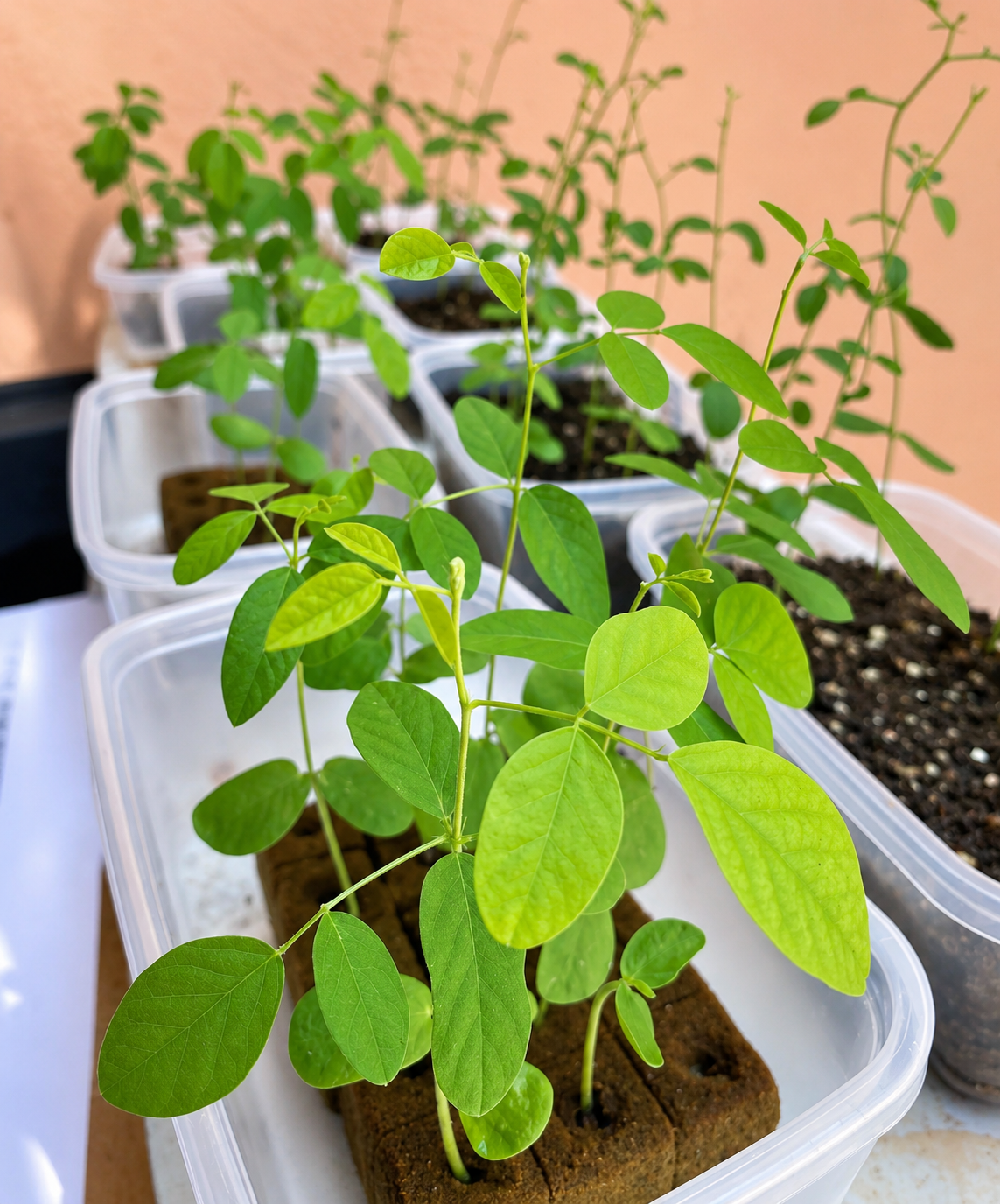
Clitoria ternatea L., commonly known as blue pea flower, is a leguminous species of increasing market interest due to its anthocyanin-rich flowers, widely used as a natural colorant and in functional food products. Despite its economic potential, studies on seedling production of this species are still limited. In this context, the present study aimed to evaluate the germination of C. ternatea in different substrates for seedling production, seeking to provide technical support for sustainable and economically viable alternatives in family farming. The comparison between two types of substrates makes it possible to identify more efficient materials for nursery use, contributing to seedling standardization and improved production efficiency. The experiment was conducted in a completely randomized design (CRD), consisting of two treatments (phenolic foam and medium-grain vermiculite combined with a commercial substrate for seedling production) and four replicates, totaling eight experimental units. Each experimental unit contained 15 seeds, resulting in a total of 120 seeds. The evaluated variables were emergence, plant height, number of leaves, and root length. Under the evaluated conditions, the treatments tested showed very similar responses in the initial development of the seedlings. Emergence, plant height, number of leaves, and root growth were not affected by the different substrates, indicating that the species maintained uniform performance regardless of the imposed variations. This occurs because, in the initial stage, plant growth depends mainly on seed reserves, which reduces the influence of external factors. Thus, both treatments were equally efficient for seedling establishment, demonstrating that the species showed good adaptation and stability during early development, even under different cultivation conditions.
Downloads
Published
Issue
Section
License
Copyright
Upon acceptance of a manuscript, authors will be asked to complete an "exclusive license" form that will allow the manuscript to be disclosed in the form of open access. In order to do the work of publishing and disseminating the research paper manuscript we need the rights to publish. For open access manuscripts, we use an exclusive licensing agreement where authors retain copyright from their manuscript.
In this agreement the authors retain rights to:
-Patents and other intellectual property rights in manuscript
-The right to credit for published work






