
WHAT IS THE EFFECTIVENESS Beauveria bassiana isolado IBCB66 AFTER MULTIPLIED "ON FARM" IN CONTROLLING NYMPHS AND ADULTS OF Euschistus heros?
DOI:
https://doi.org/10.36725/agries.v12i2.11392Keywords:
bioinsecticides, biological control, brown stink bug, IBCB66 isolatedAbstract
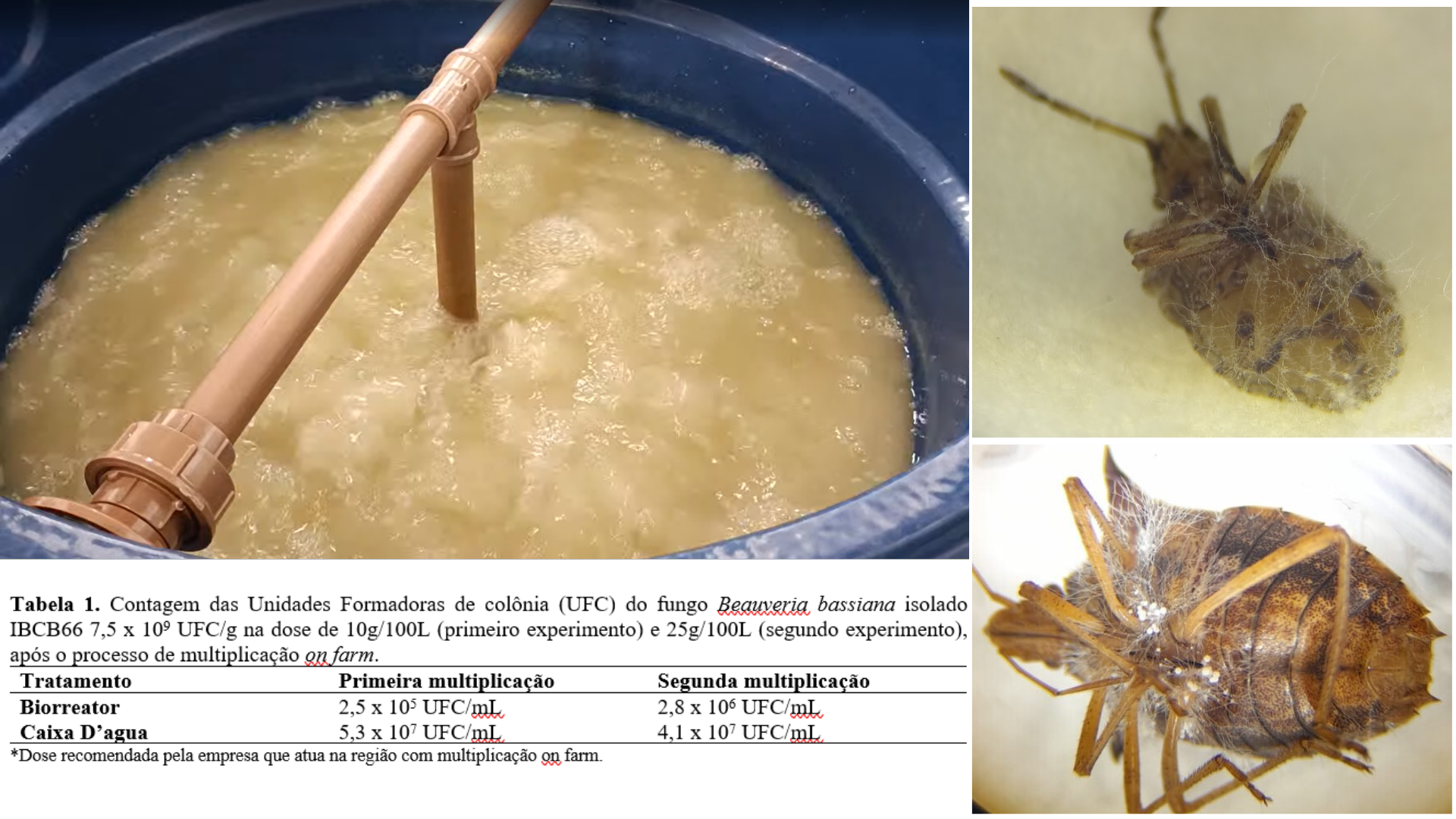
The management of Euschistus heros (Hemiptera: Pentatomidae) can be carried out using registered insecticides; however, some problems such as the emergence of insect resistance to certain chemical groups may occur. Therefore, it is important to conduct studies with less environmentally damaging technologies, aiding in management with other products. Among the tools available today for sustainable pest management are entomopathogenic microorganisms, such as fungi. The objective of this work was to evaluate, under laboratory conditions, the efficiency of fungus-based products after multiplication on the farm. For this, the fungus was multiplied in a bioreactor (T1), a water tank (T2) (simulating the conditions of the producers), and a control, using only distilled water. Forty-eight hours after multiplication, a sample was sent for fungal counting in the laboratory, and the product was used to prepare concentrations for field use and applied to the pronotum of the stink bugs (nymphs and adults). The experimental design was highly randomized, with 3 treatments and 5 replicates. Each replicate consisted of 5 individuals, totaling 25 observations for each treatment. Mortality was assessed daily, and insects that died in treatments 1 and 2 were preserved in a "mortuary chamber" to observe possible sporulation or lack thereof of the fungus. The results were analyzed, and there was a superior concentration of the fungus multiplied in the water tank compared to the bioreactor. However, mortality in both treatments did not differ significantly, except in the second phase of the experiment, where mortality was higher in the bioreactor. Considering these results, there is an indication that those multiplied on the farm in the water tank, although showing lower mortality, maintain good fungal multiplication for field use.
Downloads
Published
Issue
Section
License
Copyright
Upon acceptance of a manuscript, authors will be asked to complete an "exclusive license" form that will allow the manuscript to be disclosed in the form of open access. In order to do the work of publishing and disseminating the research paper manuscript we need the rights to publish. For open access manuscripts, we use an exclusive licensing agreement where authors retain copyright from their manuscript.
In this agreement the authors retain rights to:
-Patents and other intellectual property rights in manuscript
-The right to credit for published work






