
RESPONSES OF WHEAT GENOTYPES TO DISTINCT SEEDING DENSITIES
DOI:
https://doi.org/10.36725/agries.v11i2.10947Keywords:
Biometry, genotypes × environments interaction, model identity, plant population, regression analysisAbstract
Optimizing seeding density is a fundamental strategy for maximizing wheat (Triticum aestivum L.) yield, yet
establishing a universal recommendation is a persistent challenge in agronomy. The ideal plant population is
highly dependent on complex interactions between genotype, management practices, and environmental
conditions, often leading to contrasting results across studies. This variability makes generalized
recommendations unreliable and highlights the critical need to understand cultivar-specific responses to guide
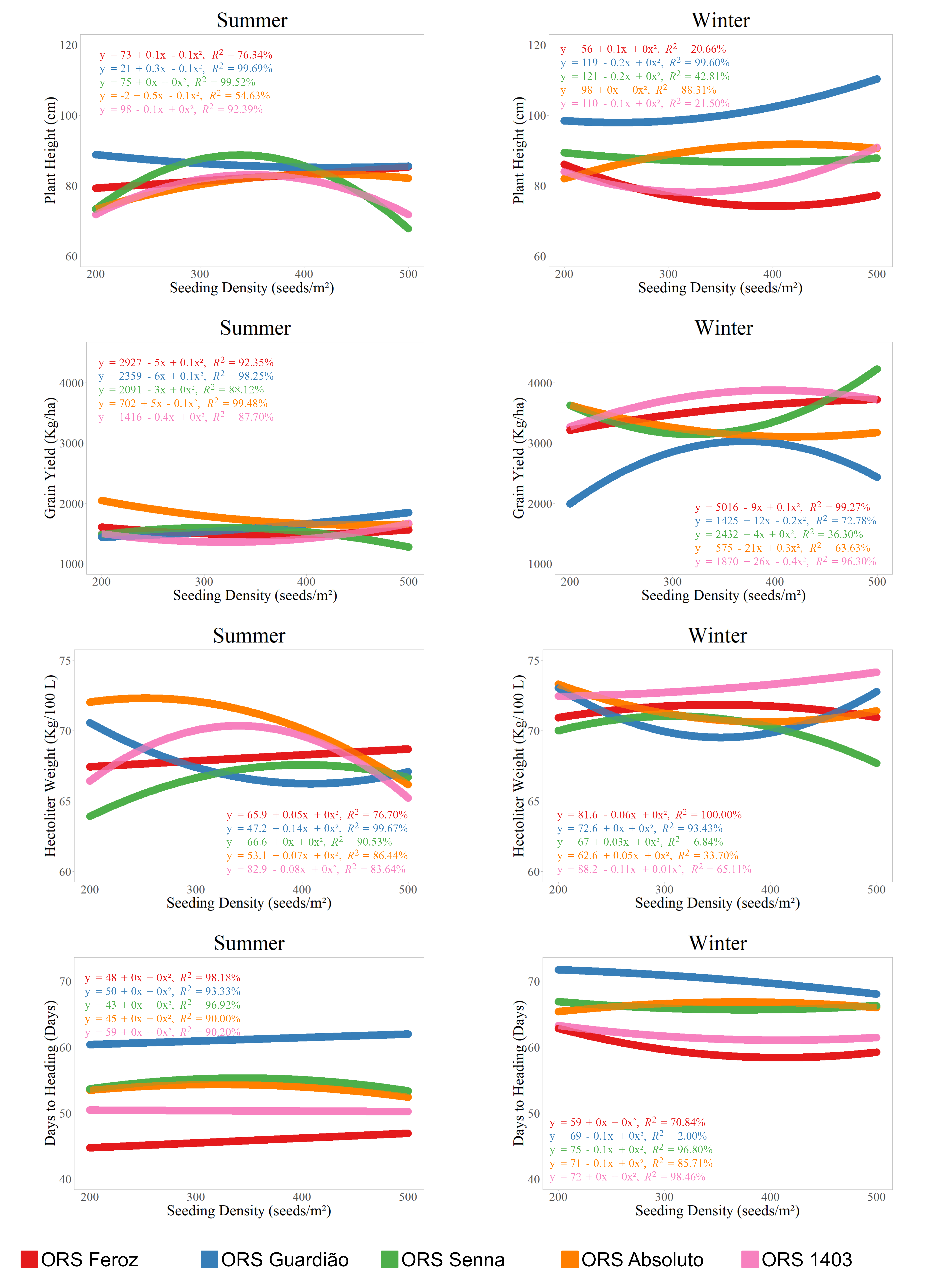
precision management. The objective of this work was to test, using the model identity test, whether a single
common regression model could adequately describe the cultivar responses or if distinct, genotype-specific
models were required. A field experiment was conducted during summer and winter, in a randomized complete
block design, and quadratic polynomial regression models were fitted for plant height, grain yield, hectoliter
weight, and days to heading. The analysis of variance for the model identity test revealed significant
differences (P < 0.05) between the complete (genotype-specific) and reduced (common) models for all traits
in both seasons. This result led to the rejection of the null hypothesis of model equality, confirming that each
cultivar exhibited a unique response pattern to the variation in seeding density. Similar genotype-specific and
season-dependent responses were observed for all traits. The findings underscore strong genotypes × densities
× environments interaction and demonstrate that a "one-size-fits-all" approach is inadequate for density
recommendations. The identity test confirmed the need for distinct models, highlighting the importance of
genotype-specific analysis in studies involving plant population density.
Downloads
Published
Issue
Section
License
Copyright
Upon acceptance of a manuscript, authors will be asked to complete an "exclusive license" form that will allow the manuscript to be disclosed in the form of open access. In order to do the work of publishing and disseminating the research paper manuscript we need the rights to publish. For open access manuscripts, we use an exclusive licensing agreement where authors retain copyright from their manuscript.
In this agreement the authors retain rights to:
-Patents and other intellectual property rights in manuscript
-The right to credit for published work






