FORMULATION AND CHARACTERIZATION OF PLANT-BASED BEVERAGES PRODUCED FROM WATER-SOLUBLE COCONUT EXTRACT SUPPLEMENTED WITH CALCIUM AND PROTEIN
DOI:
https://doi.org/10.36725/agries.v12i1.11937Keywords:
dairy milk alternatives, chickpea extract, proximate composition, nutritional enhancement, viscosityAbstract
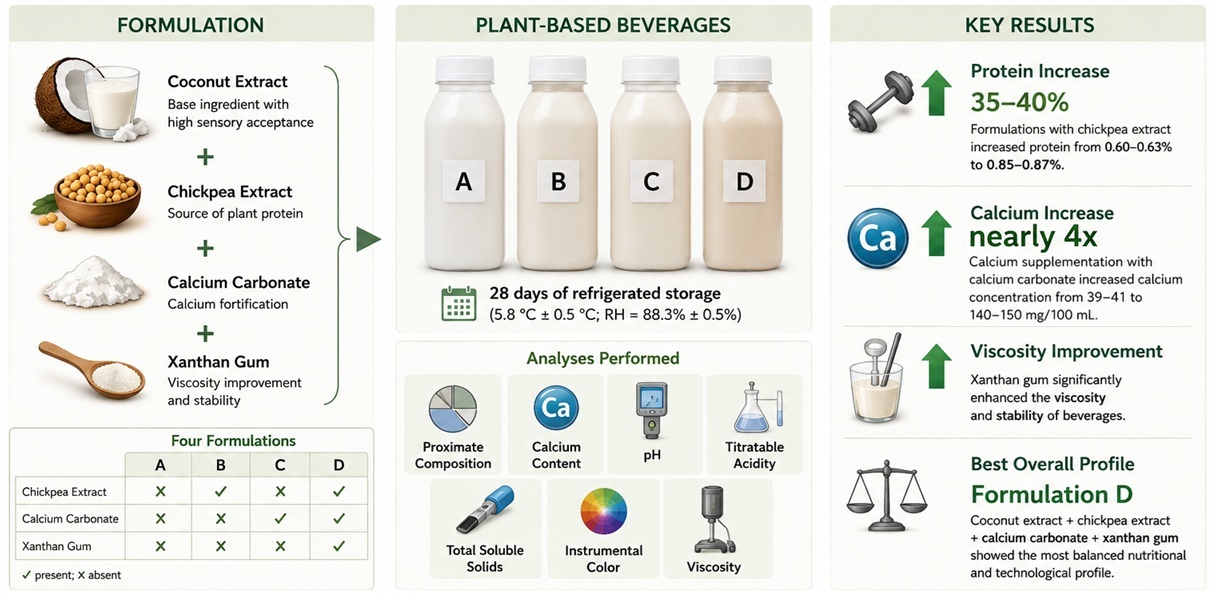
This study aimed to develop and characterize a plant-based beverage produced from a water-soluble coconut extract supplemented with protein and calcium as an alternative to animal-derived milk. Four formulations were prepared by varying the incorporation of chickpea extract, calcium carbonate, and xanthan gum. The beverages were evaluated over 28 days of refrigerated storage by analyzing proximate composition, calcium content, pH, titratable acidity, total soluble solids, instrumental color, and viscosity. Formulations containing chickpea extract showed a significant increase in protein content, rising from 0.60 – 0.63% to 0.85 – 0.87%, representing an increment of approximately 38 – 42% compared to formulations without this ingredient. Calcium supplementation with calcium carbonate resulted in an increase of nearly fourfold in calcium concentration, from 39 – 41 to 140 – 150 mg/100 mL, confirming the effectiveness of the fortification strategy. Xanthan gum markedly increased beverage viscosity. Among the evaluated treatments, formulation D, composed of coconut extract, chickpea extract, calcium carbonate, and xanthan gum, showed higher protein and calcium contents, although its high viscosity indicates the need to optimize the xanthan gum concentration. Overall, the results demonstrate that the combination of chickpea extract and calcium carbonate represents a promising strategy to improve the nutritional profile of coconut-based plant beverages.
Downloads
Published
Issue
Section
License
Copyright
Upon acceptance of a manuscript, authors will be asked to complete an "exclusive license" form that will allow the manuscript to be disclosed in the form of open access. In order to do the work of publishing and disseminating the research paper manuscript we need the rights to publish. For open access manuscripts, we use an exclusive licensing agreement where authors retain copyright from their manuscript.
In this agreement the authors retain rights to:
-Patents and other intellectual property rights in manuscript
-The right to credit for published work