
DEVELOPMENT AND EVALUATION OF A MIXED PITAYA AND PINEAPPLE JELLY ENRICHED WITH PITAYA PEEL FLOUR
DOI:
https://doi.org/10.36725/agries.v12i1.11500Keywords:
Sensory analysis, Ananas comosus L. Merril, Hylocereus undatus, Innovative productAbstract
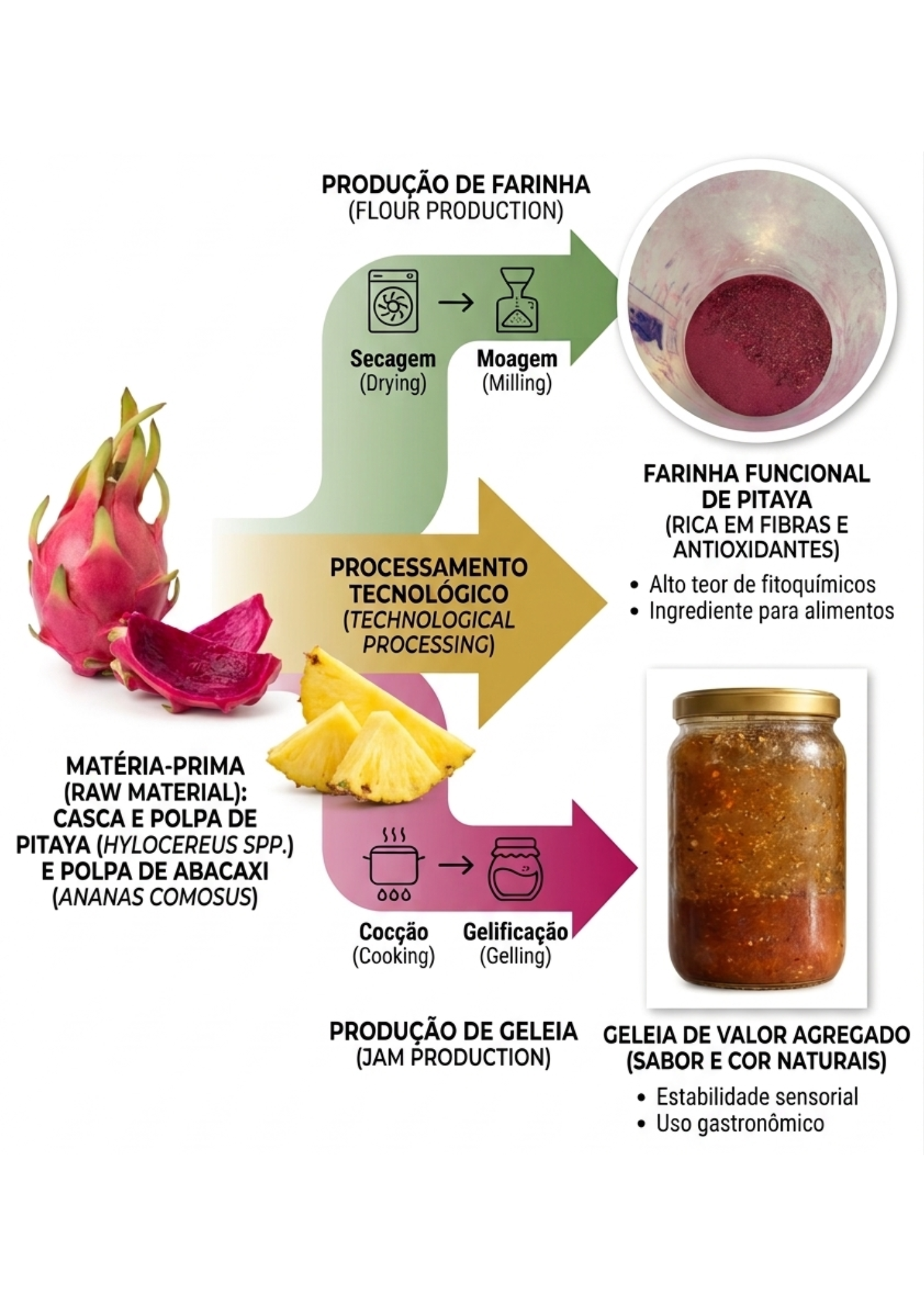
Pitaya (Hylocereus undatus) and pineapple (Ananas comosus L. Merril) show high technological potential for the development of innovative products, such as mixed jams. Thus, the present study aimed to formulate and characterize, from a physicochemical and sensory perspective, different formulations of mixed pitaya and pineapple jam produced using the whole pitaya, including the use of peel flour. Two jam formulations were prepared containing pineapple and pitaya pulp, sugar, pectin, and citric acid. In the control formulation (F1), pitaya peel flour was not added, whereas in formulation F2, pitaya peel flour was included. The following parameters were determined: pH, total soluble solids (°Brix), titratable acidity, color, microbiological analyses, and sensory evaluation with untrained panelists using hedonic scales and purchase intention tests. The physicochemical results indicated that both formulations presented pH, °Brix, and acidity values within the regulatory standards for fruit jams, demonstrating adequate stability and preservation. Microbiological analyses confirmed the safety of the products. Colorimetric evaluation revealed that the addition of pitaya peel flour significantly influenced color parameters, promoting greater chromatic intensity. Sensory analysis showed high acceptance for both formulations. It is concluded that the use of pitaya peel in flour form is technically feasible and sustainable, although formulation adjustments are necessary to optimize sensory acceptance and the commercial viability of the product.
Downloads
Published
Issue
Section
License
Copyright
Upon acceptance of a manuscript, authors will be asked to complete an "exclusive license" form that will allow the manuscript to be disclosed in the form of open access. In order to do the work of publishing and disseminating the research paper manuscript we need the rights to publish. For open access manuscripts, we use an exclusive licensing agreement where authors retain copyright from their manuscript.
In this agreement the authors retain rights to:
-Patents and other intellectual property rights in manuscript
-The right to credit for published work






