The THE PHYSIOLOGICAL EFFECT OF THE PLANT GROWTH REGULATOR 2,4-D ON LEAVES AND FRUIT OF SWEET ORANGE AFFECTED BY CITRUS CANKER
DOI:
https://doi.org/10.36725/agries.v12i1.11401Keywords:
Abscission, Diameter of lesions, Peroxidase activity, Fruit detachment force, PhytopathologyAbstract
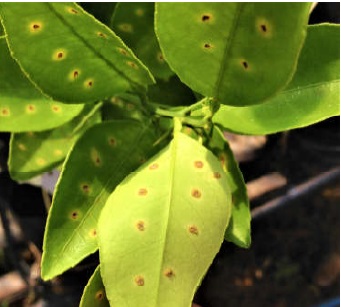
Citrus canker, caused by Xanthomonas citri subsp. citri (Xcc), is a highly destructive disease that significantly reduces both yield and fruit quality. The pathogen infects young leaf tissues, fruits, and shoots of susceptible citrus plants, often leading to severe defoliation and premature fruit drop. The herbicide 2,4-dichlorophenoxyacetic acid (2,4-D) is a synthetic auxin used at specific concentrations to mitigate citrus fruit drop. This study aimed to evaluate the in vitro effect of 2,4-D at various concentrations (0, 0.15, 0.30, 0.45, 0.60, and 0.75 mg i.a. L-1) on Xcc colonies, and to assess its impact on the lesion diameter of citrus canker on detached leaves of sweet orange (Citrus sinensis). Leaves were sampled 21 days after application (DAA) of 2,4-D at concentrations of 0, 0.20, 0.50, and 0.80 mg i.a. L-1. Additionally, the activity of soluble peroxidase was determined at 2, 7, and 14 DAA. Field trials were conducted to evaluate the development of citrus canker on leaves and the fruit detachment force required to remove fruit from the peduncle under the same concentration gradient. Results indicated that no 2,4-D concentration tested in vitro significantly affected Xcc colony-forming units (CFU). However, the mean lesion diameter on detached leaves and peroxidase activity decreased progressively with increasing concentrations of 2,4-D. While field observations showed a modest reduction in leaf lesion development, no significant impact was observed on the fruit detachment force. We conclude that although 2,4-D demonstrates potential in reducing the severity of citrus canker lesions, it does not significantly mitigate defoliation or fruit drop in field conditions at the tested concentrations.ncentrations.
Downloads
Published
Issue
Section
License
Copyright
Upon acceptance of a manuscript, authors will be asked to complete an "exclusive license" form that will allow the manuscript to be disclosed in the form of open access. In order to do the work of publishing and disseminating the research paper manuscript we need the rights to publish. For open access manuscripts, we use an exclusive licensing agreement where authors retain copyright from their manuscript.
In this agreement the authors retain rights to:
-Patents and other intellectual property rights in manuscript
-The right to credit for published work