
CHARACTERIZATION OF FECAL SCORE INDICATORS IN SMALL RUMINANTS GRAZING ON NATIVE VEGETATION OF THE CAATINGA IN NORTHEASTERN BRAZIL
DOI:
https://doi.org/10.36725/agries.v12i1.11385Keywords:
fecal consistency, droppings, nutritional monitoring, ruminant nutritionAbstract
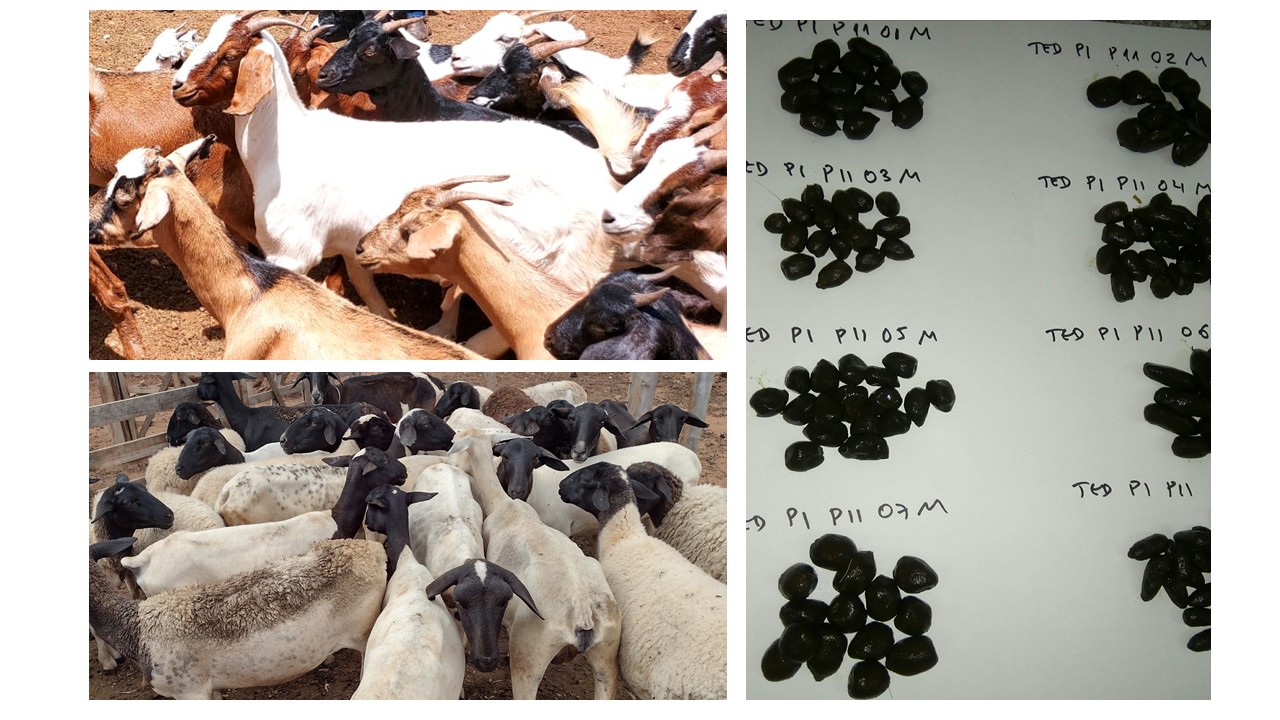
The evaluation of fecal characteristics in small ruminants constitutes a practical and non-invasive tool for monitoring the nutritional status and gastrointestinal health of herds. For this purpose, 728 fecal samples were collected from goats and sheep using spot sampling directly from the rectal ampulla, during the morning and afternoon periods, in the states of Paraíba and Piauí, aiming at visually characterizing fecal score indicators, considering the variables consistency, color, and content. To determine the similarity between goat and sheep fecal samples, an exploratory analysis was performed using Principal Component Analysis (PCA) on Hotelling's ellipse (Hotelling's T2 statistic), as well as the SIMCA (Soft Independent Modelling of Class Analogy) classification, the results of which demonstrated a similarity between them, allowing the characterization of fecal score indicators to be carried out with a robust sample bank, considering all samples from both species in this study. The characterization obtained a gradation ranging from 1 to 5, regarding consistency: A1 (Diarrhea), A2 (Indeterminate Soft), A3 (Pasty), A4 (Cíbalas) and A5 (Indeterminate Dry); in terms of color: C1 (Greenish), C2 (Brown), C3 (Bright Brown), C4 (Black) and C5 (Bright Black) and in terms of content: E1 (Seed), E2 (Hair), E3 (Mucus), E4 (Blood) and E5 (Indeterminate Element). The data obtained were subjected to exploratory analysis, through observation of morphological characteristics recorded by means of photographs and detailed descriptions of the variables. With the characterization of the variables, they were quantified in the sample set: for consistency, the quantitative percentage varied between indicators A2, A3 and A4, being highest for A4 (60%); for color, there was variation among all indicators, being the highest for C4 (33%); and for content, the quantitative percentage varied between indicators E1, E2 and E3, being the highest for E1 (51%). The technique of visualizing fecal samples proved effective for characterizing fecal score indicators in small ruminants grazing on native Caatinga vegetation.
Downloads
Published
Issue
Section
License
Copyright
Upon acceptance of a manuscript, authors will be asked to complete an "exclusive license" form that will allow the manuscript to be disclosed in the form of open access. In order to do the work of publishing and disseminating the research paper manuscript we need the rights to publish. For open access manuscripts, we use an exclusive licensing agreement where authors retain copyright from their manuscript.
In this agreement the authors retain rights to:
-Patents and other intellectual property rights in manuscript
-The right to credit for published work






