
UNCOVERING THE ANTIOXIDANT AND ANTIMICROBIAL POTENTIAL OF NON-CONVENTIONAL EDIBLE PLANTS COMMONLY FOUND IN BRAZIL
A REVIEW
DOI:
https://doi.org/10.36725/agries.v12i1.11381Keywords:
Bioactivity, Biodiversity, Unconventional plants, Underutilized plantsAbstract
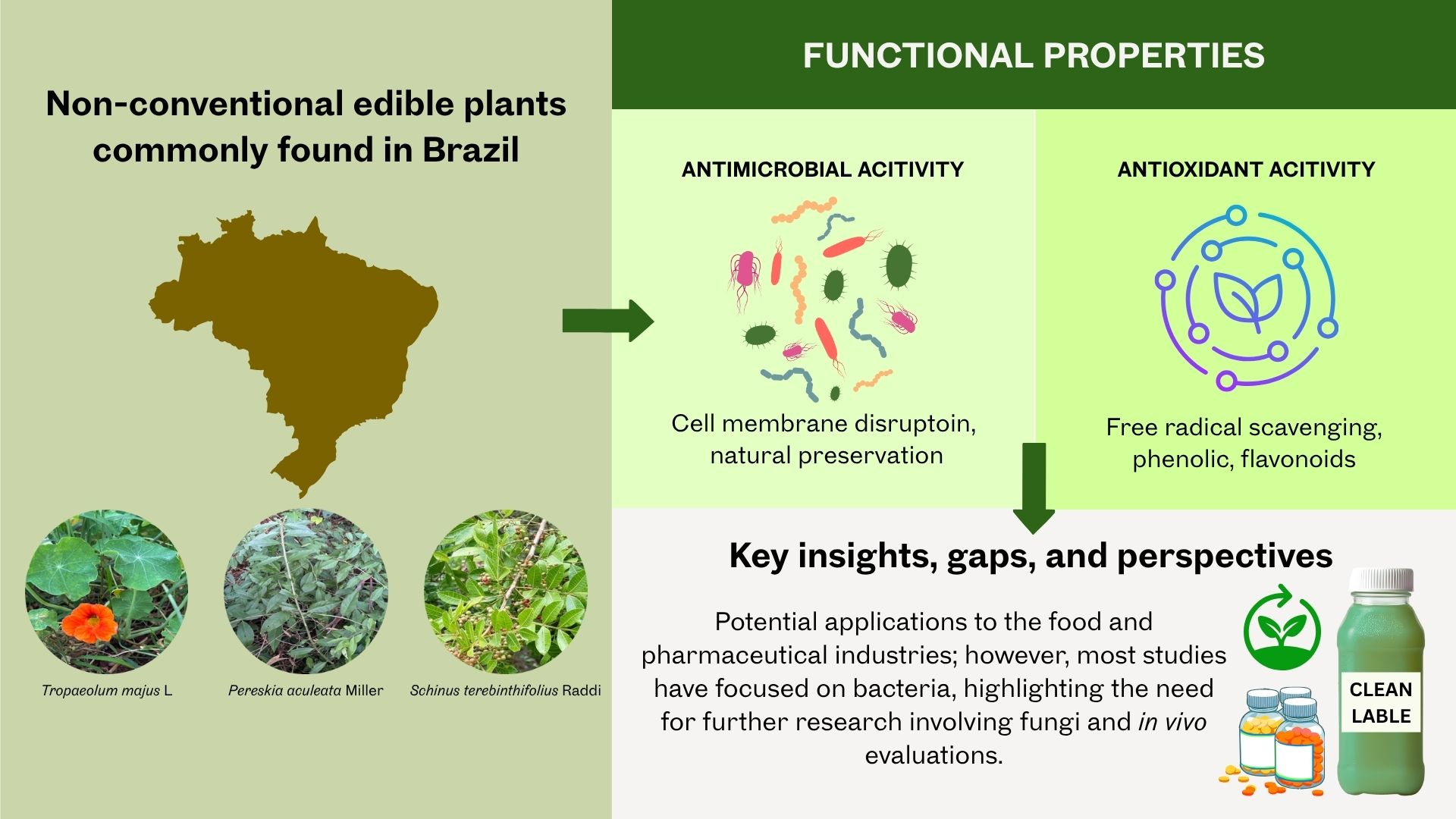
Brazil, one of the most megadiverse countries, is home to numerous non-conventional edible plants (NCEP), whose functional applications are underexplored. This review highlighted the antimicrobial and antioxidant properties of Schinus terebinthifolius Raddi (pink pepper), Pereskia aculeata Miller (ora-pro-nóbis), and Tropaeolum majus L. (nasturtium). A literature review was conducted to identify key findings, bioactive compounds, extraction methods, gaps and challenges that affect the consistency of the results. The literature review covered studies published between 2012 and 2025, identified through keyword searches in scientific databases. Studies focusing on essential oils, undergraduate theses, dissertations, doctoral theses, and conference abstracts were excluded. After applying these criteria, a total of 45 studies were included in the final analysis. While antioxidant activity is consistently supported across various assays, antimicrobial evidence for P. aculeata and T. majus is often limited or inconclusive, despite frequent citations in the literature. There is a clear need to detailed compound profiling to establish correlations between biological activity and the specific metabolites responsible for such effects. Despite limitations, promising results support the potential of these plants for future applications in the food and pharmaceutical industries. By consolidating current findings and highlighting research limitations, this review provides a valuable resource to support and guide future investigations into the functional applications and bioactive constituents of NCEP.

Downloads
Published
Issue
Section
License
Copyright
Upon acceptance of a manuscript, authors will be asked to complete an "exclusive license" form that will allow the manuscript to be disclosed in the form of open access. In order to do the work of publishing and disseminating the research paper manuscript we need the rights to publish. For open access manuscripts, we use an exclusive licensing agreement where authors retain copyright from their manuscript.
In this agreement the authors retain rights to:
-Patents and other intellectual property rights in manuscript
-The right to credit for published work






