
EVALUATION OF THE EFFECT OF MICROALGAL EXTRACT (Chlorella sp.) ON THE GERMINATION OF CRISP LETTUCE SEEDS (Lactuca sativa L.)
DOI:
https://doi.org/10.36725/agries.v12i1.11081Keywords:
Urban aquatic environments, Eutrophication, plant biostimulantAbstract
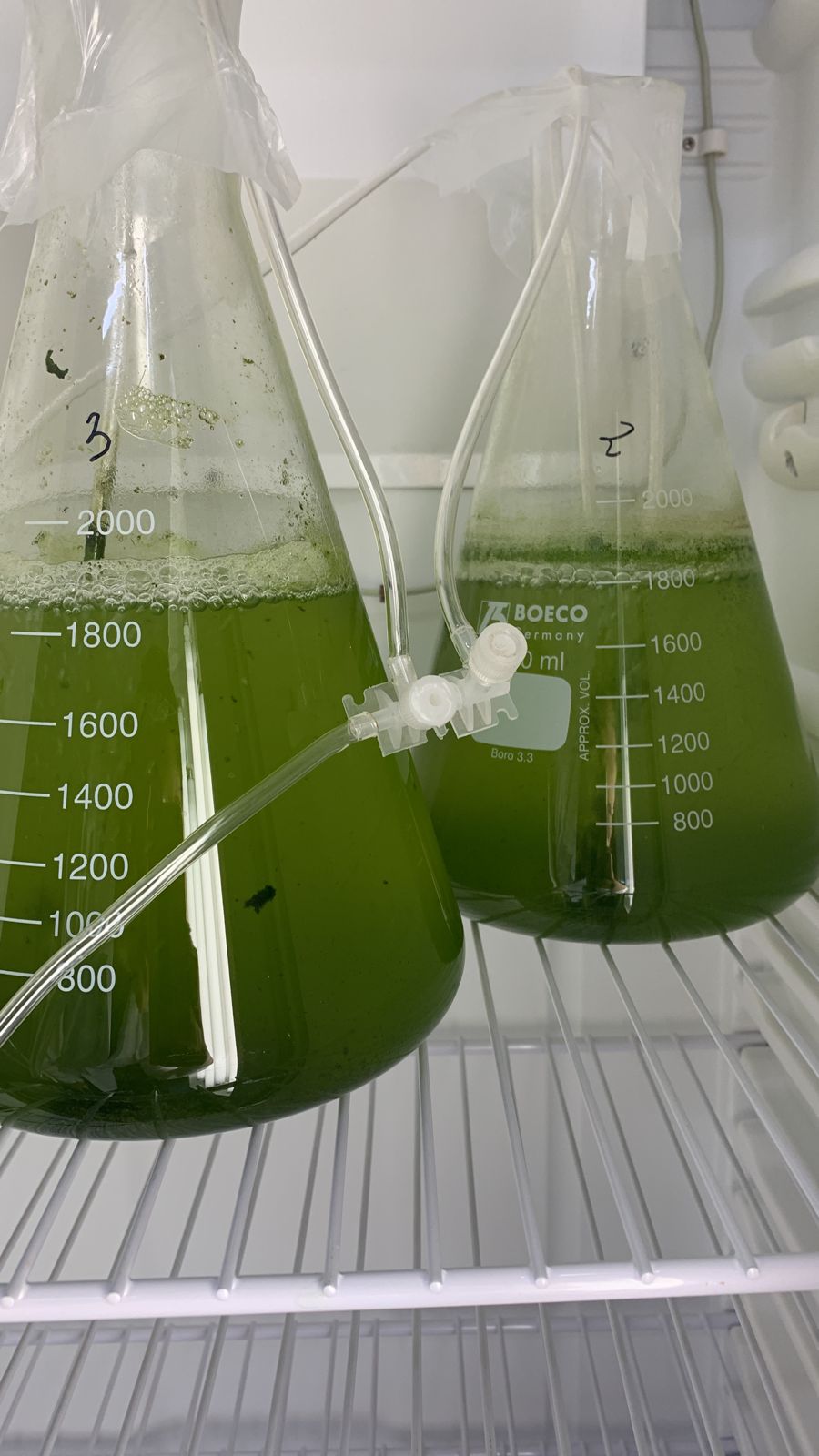
The use of microalgae as agricultural biostimulants has gained increasing attention due to the presence of bioactive compounds capable of influencing plant physiological processes. This study aimed to identify and characterize microalgal communities from urban aquatic environments, develop a selective cultivation method, and evaluate the effect of an aqueous extract of Chlorella sp. on the germination of crisp lettuce (Lactuca sativa L.) seeds. Samples were collected from four sites in Lago de Palmas (Tocantins, Brazil), where 28 microalgal species were identified, with qualitative and quantitative variations associated with the degree of environmental eutrophication. Selective cultivation was optimized using different concentrations of NPK (10-10-10), with $1\ \text{g L}^{-1}$ providing the most favorable conditions for Chlorella sp. growth. The resulting aqueous extract was applied in germination assays under controlled conditions to assess germination percentage (%G), germination speed index (GSI/IVG), and mean germination time (MGT/TMG). After 12 days, seeds treated with the microalgal extract showed a significant increase in germination compared to the control. This effect was most pronounced when the extract was applied via reapplication, resulting in higher %G and GSI and lower MGT. Conversely, prolonged seed immersion in the extract negatively impacted germination speed. These findings indicate that the aqueous extract of Chlorella sp. acts as an effective plant biostimulant, though its efficacy is strictly dependent on the mode of application, highlighting the potential of microalgae as a sustainable alternative for modern agriculture.
Downloads
Published
Issue
Section
License
Copyright
Upon acceptance of a manuscript, authors will be asked to complete an "exclusive license" form that will allow the manuscript to be disclosed in the form of open access. In order to do the work of publishing and disseminating the research paper manuscript we need the rights to publish. For open access manuscripts, we use an exclusive licensing agreement where authors retain copyright from their manuscript.
In this agreement the authors retain rights to:
-Patents and other intellectual property rights in manuscript
-The right to credit for published work






