SOYBEAN RESPONSE TO FOLIAR APPLICATION OF POTASSIUM AT THE R3 STAGE UNDER FIELD CONDITIONS
DOI:
https://doi.org/10.36725/agries.v12i2.11572Keywords:
Foliar fertilization, Glycine max (L.) Merrill, dry matter, plant nutritionAbstract
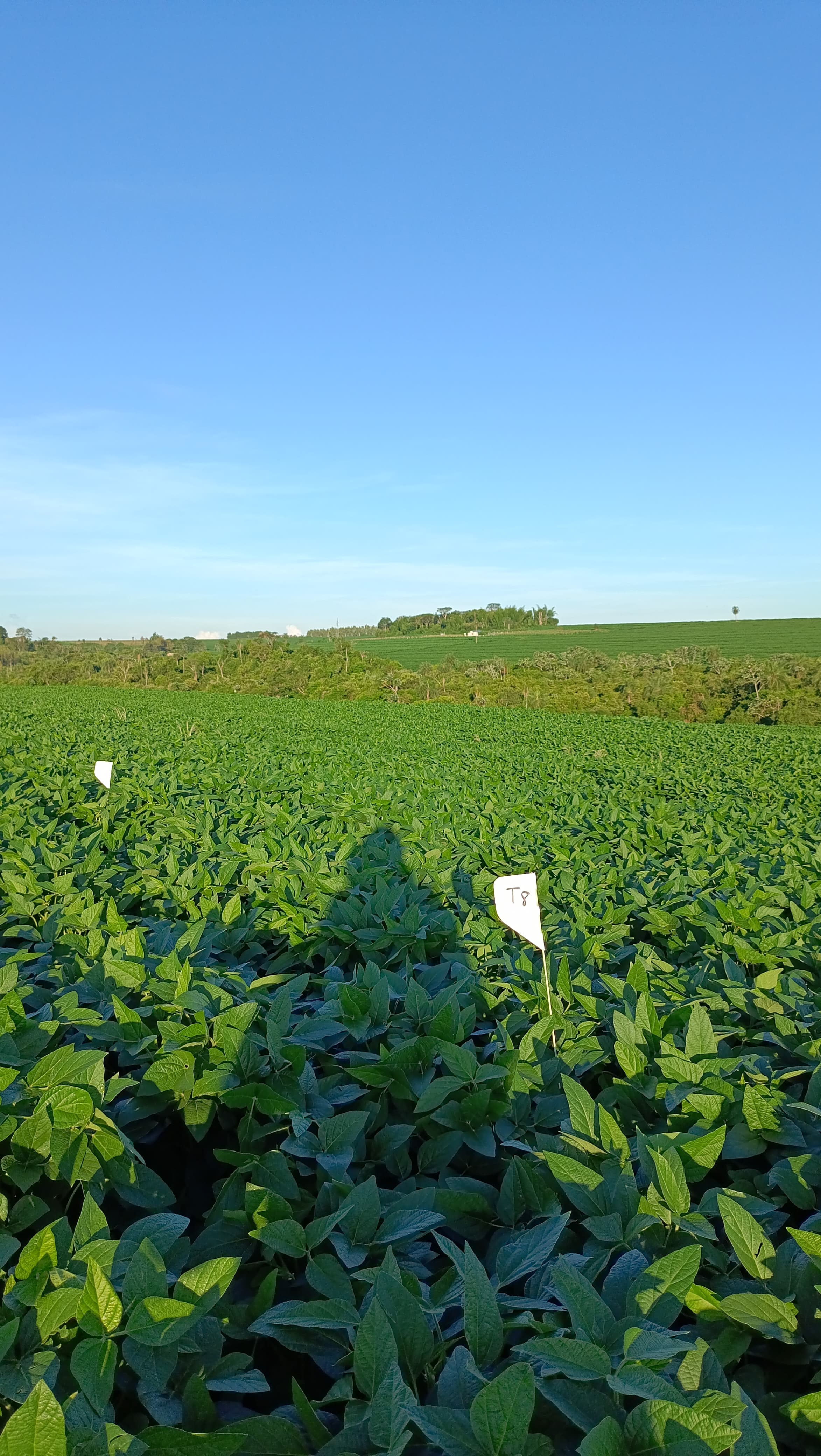
The use of potassium-based foliar fertilizers has been adopted as a complementary nutritional management strategy in soybean, although crop response varies according to growing conditions and the applied dose. This study aimed to evaluate the effect of different doses of a potassium-based foliar fertilizer applied at the R3 stage on shoot dry matter and thousand-seed weight of soybean cultivar 75HO111 CI IPRO (APORÉ) under field conditions. The experiment was conducted in Campo Verde, Mato Grosso, Brazil, from September 2021 to January 2022, in a randomized complete block design, with four treatments and five replications. The evaluated doses were 0.0; 16.2; 24.3; and 32.4 g ha⁻¹ of the product, equivalent to 0.000, 0.081, 0.122, and 0.162 g L⁻¹ of spray solution, considering a spray volume of 200 L ha⁻¹. The application was performed at 47 days after emergence, at the R3 stage. Shoot dry matter was evaluated between stages R5.5 and R6, and thousand-seed weight was determined at harvest. Data were subjected to analysis of variance and, in the absence of significant effects, means were compared by Tukey’s test at the 5% probability level. Foliar application did not promote a significant effect on the analyzed variables. Thousand-seed weight ranged from 175.75 to 184.50 g, while shoot dry matter ranged from 1,470.70 to 1,634.72 g among treatments. It was concluded that, under the edaphoclimatic conditions of the experiment, foliar application of the potassium fertilizer at the R3 stage did not alter shoot dry matter or thousand-seed weight of soybean.
Downloads
Published
Issue
Section
License
Copyright
Upon acceptance of a manuscript, authors will be asked to complete an "exclusive license" form that will allow the manuscript to be disclosed in the form of open access. In order to do the work of publishing and disseminating the research paper manuscript we need the rights to publish. For open access manuscripts, we use an exclusive licensing agreement where authors retain copyright from their manuscript.
In this agreement the authors retain rights to:
-Patents and other intellectual property rights in manuscript
-The right to credit for published work