APPLICATIONS OF HERBICIDES IN PRE-EMERGENCY FOR THE CONTROL OF Mucuna spp
DOI:
https://doi.org/10.36725/agries.v10i1.8676Keywords:
Green manure, chemical control, weed, toleranceAbstract
In the reform of sugarcane field a practice used in the sector is green manuring with legumes, to increase
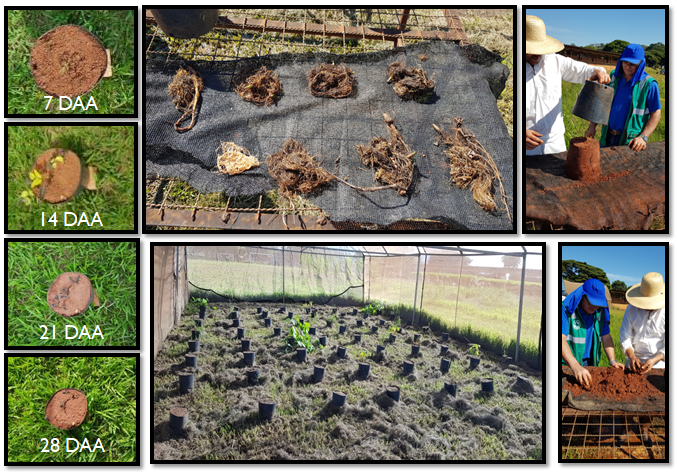
sugarcane production. However, if legume management, such as velvet bean, is inadequate, it can facilitate its establishment and consequently cause losses and interruptions in the mechanized harvesting of sugarcane. Thus, this research aimed to evaluate the pre-emergence control of black velvet bean and gray velvet bean with different herbicides. The test was carried out in a greenhouse with five liter pots, using a randomized block design, in a 2x8 factorial scheme, the first factor being black velvet bean and gray velvet bean, and the second factor being seven treatments of herbicides (control, amicarbazone, amicarbazone, sulfentrazone + tebuthiuron, 2,4D + picloram, tebuthiuron, sulfentrazone, diuron + sulfentrazone), with four replications. The application condition was in pre-emergence of the plants. The effects of treatments were evaluated at 7, 14, 21, 28, 60 and 90 days after application (DAA) by the percentage of control and determination of fresh and dry mass of aerial parts and roots of plants at 90 DAA, in addition to characterization of seed lots. Sulfentrazone + tebuthirom, sulfentrazone and diuron + sulfentrazone treatments showed good control from the first evaluations. Due to 100% control of all treatments at 90 DAA, no fresh or dry mass values were found for the species, only for the control. It was concluded that all treatments applied in pre-emergence controlled, black velvet bean and gray velvet bean, however the mixture of sulfentrazone + tebuthiuron already showed control from 7 days, while sulfentrazone and diuron + sulfentrazone at 14 days, and the amicarbazone, both doses, and tebuthiuron at 21 days and 2.4D + picloram for gray velvet bean at 28 days, and only after 28 days that black velvet bean achieved effective control.
Downloads
Published
Issue
Section
License
Copyright
Upon acceptance of a manuscript, authors will be asked to complete an "exclusive license" form that will allow the manuscript to be disclosed in the form of open access. In order to do the work of publishing and disseminating the research paper manuscript we need the rights to publish. For open access manuscripts, we use an exclusive licensing agreement where authors retain copyright from their manuscript.
In this agreement the authors retain rights to:
-Patents and other intellectual property rights in manuscript
-The right to credit for published work