PHARMACOTECHNICAL DEVELOPMENT AND PHYSICAL CHARACTERIZATION OF POLYMERIC MATRICES BASED ON Morus nigra L. EXTRACT UNDER DIFFERENT EXTRACTION METHODS
DOI:
https://doi.org/10.36725/agries.v12i3.12071Keywords:
biopolymers, blackberry, hydrocolloids, menopause, phytotherapyAbstract
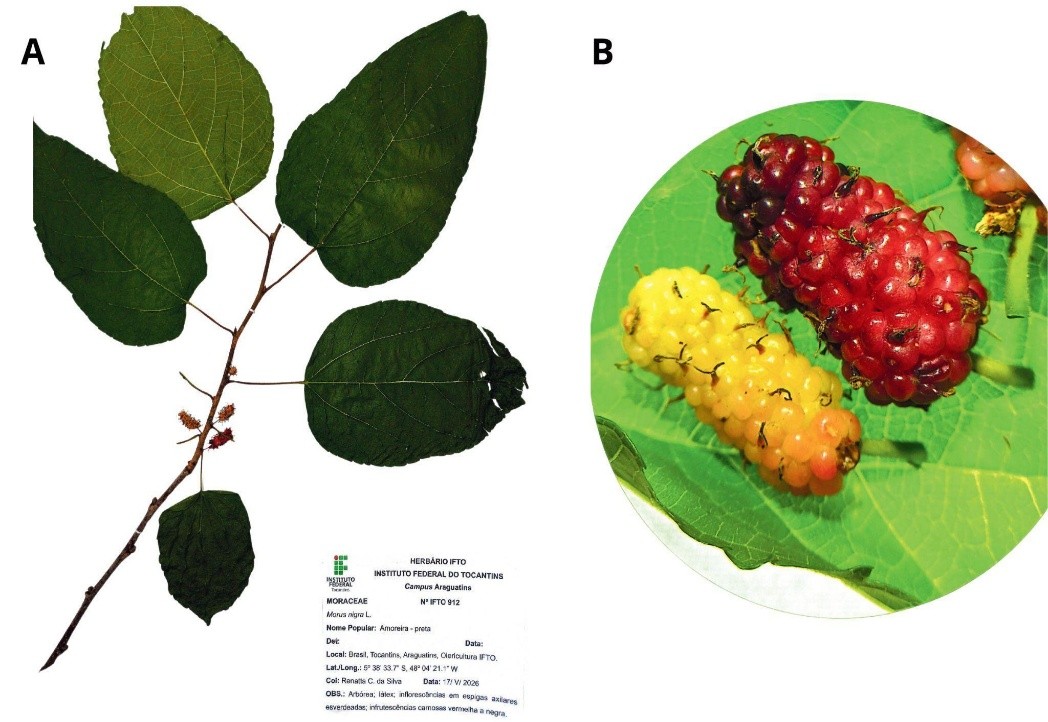
The technological utilization of botanical resources for the development of bioproducts represents a promising area in pharmacotechnical innovation, boosting the valorization of biodiversity. In this context, the leaves of Morus nigra L. (black mulberry) stand out for their broad bioactive potential, requiring efficient methodologies for their incorporation into solid pharmaceutical dosage forms. The present study aimed to formulate chewable polymeric matrices (gummies) incorporating the extract of M. nigra leaves, duly cataloged in the IFTO Herbarium (voucher no. 912), rigorously evaluating the impact of different thermal extraction profiles on the physical, macroscopic, and dimensional characteristics of the final product. The base formulation was structured from the synergistic association of agar and xanthan gum. The active compounds were obtained by continuous hot extraction and cold extraction, followed by molding through thermal dispersion. The rigorous physical quality control consisted of dimensional analysis with an analog caliper, measurement of individual average weight, and organoleptic evaluation. Statistical analysis to compare physical parameters was conducted using Student's t-test. The results indicated that the extractive method interfered significantly with workability and yield. The batch formulated with hot extract presented higher production yield (20 units), excellent workability, and compacted matrices with an average mass of 2.54 g and a thickness of 14.21 mm. In contrast, the addition of the cold extract generated a matrix with high structural adhesiveness and rapid retraction, resulting in lower yield (15 units), lower average weight (2.09 g), and a significantly thicker format (17.53 mm) (p < 0.001). It is concluded that the extraction method directly affects the macroscopic behavior of biopolymers, with hot extraction being superior as it technologically enables the development of a structurally stable bioproduct with standardized dosage.
Downloads
Published
Issue
Section
License
Copyright
Upon acceptance of a manuscript, authors will be asked to complete an "exclusive license" form that will allow the manuscript to be disclosed in the form of open access. In order to do the work of publishing and disseminating the research paper manuscript we need the rights to publish. For open access manuscripts, we use an exclusive licensing agreement where authors retain copyright from their manuscript.
In this agreement the authors retain rights to:
-Patents and other intellectual property rights in manuscript
-The right to credit for published work