
PRODUCTIVE AND AGRONOMIC INDICES OF BEANS GROWN IN A MULCHED SYSTEM UNDER GREEN MANURE TREATMENTS
DOI:
https://doi.org/10.36725/agries.v11i2.10824Keywords:
family farming, cowpea, cover crops, cropping systemAbstract
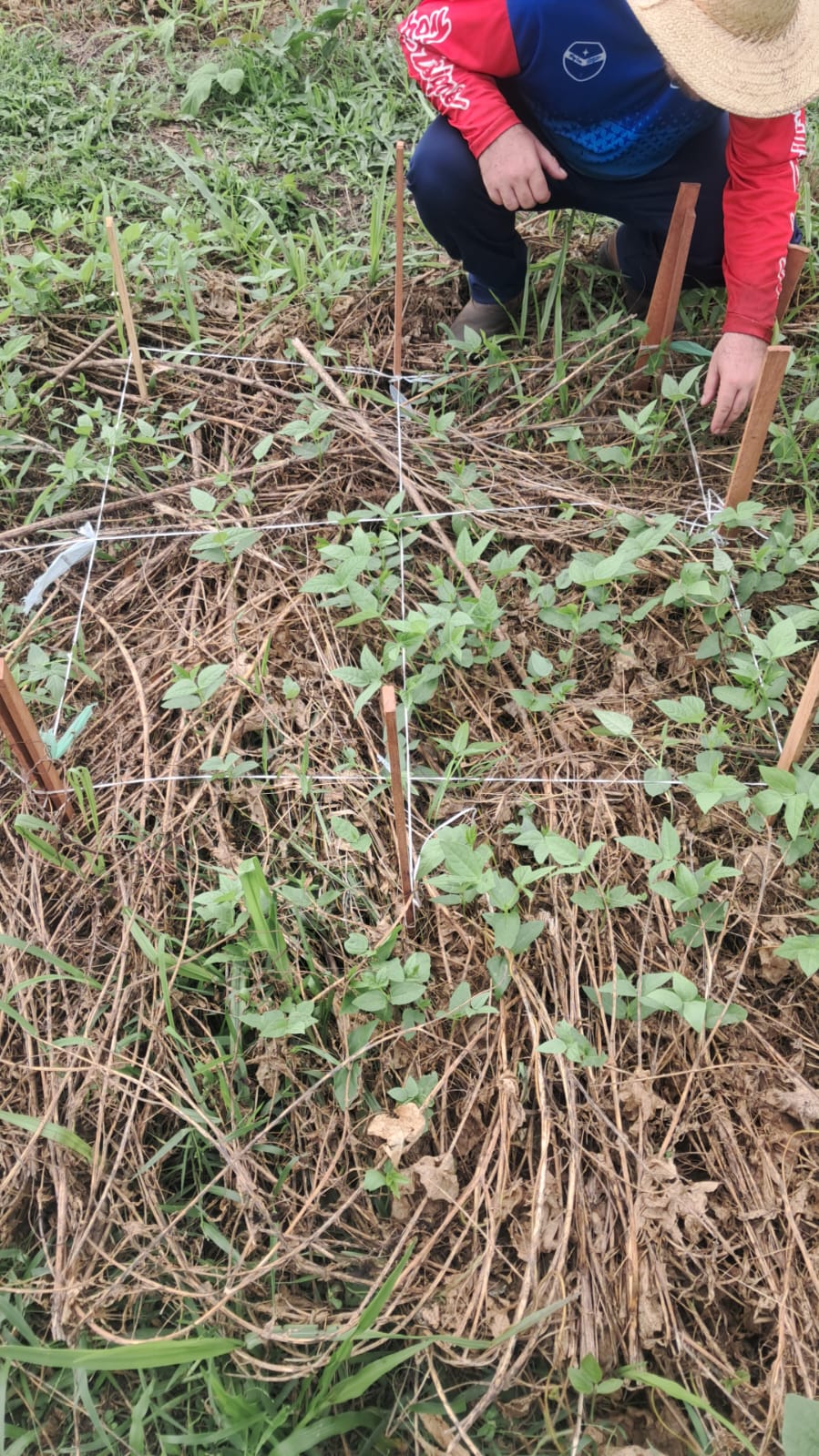
In Maranhão, the main cultivation system practiced by family farmers is the “roça no toco,” with a growing adoption of the “feijão abafado” system, characterized by the absence of burning during field preparation. The objective of this study was to evaluate the yield of cowpea (Vigna unguiculata (L.) Walp) under the “feijão abafado” cultivation system combined with different green manure species. The research was carried out at the Experimental Garden of the Federal University of Maranhão (UFMA), Bacabal Campus, between 2023 and 2024. A completely randomized design was used, with four treatments and five replications. Three green manure species were used: sunn hemp (Crotalaria ochroleuca), jack bean (Canavalia ensiformis), and velvet bean (Mucuna pruriens), along with fallow as the control treatment. After cultivation of these species, their biomass production was measured, and subsequently, they were incorporated as mulch for cowpea. Evaluations included biomass production, ecological indices, and cowpea yield and yield components. Treatments with sunn hemp and jack bean produced the highest biomass (P<0.05). Yield components showed no direct relationship with cowpea productivity. However, sunn hemp and velvet bean resulted in the highest cowpea yields (P<0.05). The “feijão abafado” technique proved to be a viable production strategy, especially when using sunn hemp and velvet bean as cover crops for green manuring, confirming their efficiency for the intended purpose.
Downloads
Published
Issue
Section
License
Copyright
Upon acceptance of a manuscript, authors will be asked to complete an "exclusive license" form that will allow the manuscript to be disclosed in the form of open access. In order to do the work of publishing and disseminating the research paper manuscript we need the rights to publish. For open access manuscripts, we use an exclusive licensing agreement where authors retain copyright from their manuscript.
In this agreement the authors retain rights to:
-Patents and other intellectual property rights in manuscript
-The right to credit for published work






