
STORAGE TIME ON THE CONTENT OF BIOACTIVE COMPOUNDS AND ANTIOXIDANT ACTIVITY OF FROZEN CASSAVA ROOTS
DOI:
https://doi.org/10.36725/agries.v11i1.10358Keywords:
functional compounds, freezing, nutritional qualityAbstract
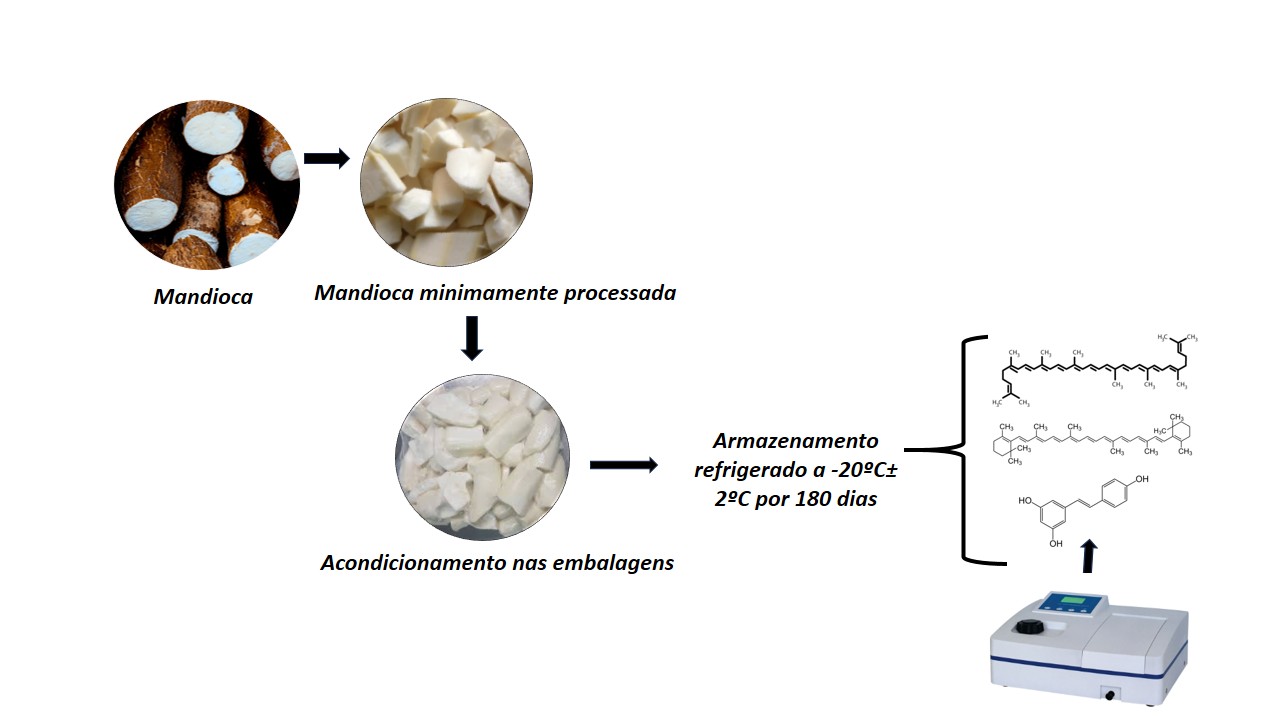
This study aimed to evaluate the influence of storage time on the levels of bioactive compounds and
antioxidant activity in frozen cassava cultivars BRS 400 (pink flesh), Cacau (yellow flesh), and Jari (white
flesh). The roots were obtained from the city of Porto Nacional, in the state of Tocantins. They were then
packaged in high-density polyethylene containers, frozen at -18°C, and stored for 180 days. Samples were
evaluated every 45 days of storage for total phenolic compounds, lycopene, β-carotene, total carotenoids, and antioxidant activity. Pink-fleshed roots had the highest levels of phenolic compounds, lycopene, and
antioxidant activity; yellow-fleshed roots had the highest beta-carotene content; and white-fleshed roots had
the lowest levels of bioactive compounds and the lowest antioxidant activity. 'BRS 400' and 'Cacau' cassava showed significant losses of the evaluated bioactive compounds and antioxidant activity. In contrast, 'Jari'
cassava showed no changes in these variables, except for the decrease observed in lycopene, during storage.
The pink and yellow roots showed a reduction in total carotenoid content during storage. The white-fleshed
cultivar had the lowest levels of bioactive compounds and antioxidant activity, and the least significant loss of
these compounds during storage. It is concluded that storing the three cultivars for 45 days did not cause
significant losses of any bioactive compounds or antioxidant activity.
Downloads
Published
Issue
Section
License
Copyright
Upon acceptance of a manuscript, authors will be asked to complete an "exclusive license" form that will allow the manuscript to be disclosed in the form of open access. In order to do the work of publishing and disseminating the research paper manuscript we need the rights to publish. For open access manuscripts, we use an exclusive licensing agreement where authors retain copyright from their manuscript.
In this agreement the authors retain rights to:
-Patents and other intellectual property rights in manuscript
-The right to credit for published work






